|
KOSHER DELIGHT - YOUR JEWISH ONLINE MAGAZINE!
|
| |
 |
|
|
|
|
|
|
| |
ITALY |
|
| |
| |
Region: |
Region
Capital: |
Other
Important Cities: |
| 9. |
Tuscany |
Florence |
Siena,
Pisa,
Arezzo, Pistoia,
Pitigliano,
Camaiore,Viareggio,
Lucca,
Livorno,
Grosseto,
Massa
Carrara |
TUSCANY: JEWISH AND KOSHER
LIVORNO:
|
SYNAGOGUES: |
|
|

|
|
LAMPRONTI
SYNAGOGUE
Piazza Benamozegh 1
Tel: 0586-896-290
Rabbi Isidoro Kahn
Open Daily
Nusach: Sfardi - Italian
LIVORNO
(LEGHORN) "MAIN SYNAGOGUE"
Piazza Benamozegh 1
Tel: 0586-896-290
Email: info@comunitaebraica.org
Website: http://www.comunitaebraica.org
Rabbi Isidoro Kahn
Open Holidays
Nusach: Sfardi - Italian
MARINI SYNAGOGUE
Via Micali 21
Rabbi Isidoro Kahn
|
|
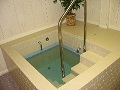
| MIKVAH: |
|
THE LIVORNO (LEGHORN)
MIKVAH
Contact: Levi Weiss
Telephone: 0586-882-584
|
|
| JEWISH
CEMETERY: |
|
THE JEWISH CEMETERY OF LIVORNO (LEGHORN)
Via Fabio Filzi
Tel: 0586-410-862 |
|
| |
|
| GENERAL
BACKGROUND: |
Livorno was the ideal town during the late
Renaissance, it was founded by Francesco de’ Medici I°, its
development was characterized by a florid harbor activity and by the
"Constitution" in 1593: this document helped the
immigration, protecting the immigrant’s freedom, and helping the
construction of new communities.
The town has two main places: the ideal city designed by Medici family
and the expanded center built by Lorena family in VIII century.
Buontalenti ( a famous architect) draw the plan of the city, that has
been partially destroyed during the last war.
The expansion of Livorno, during VIII and IX centuries is
characterized by elegant houses and old hotels, that testimonies of a
great tourist development and a great success in that period. |
| THE BEGINNING OF THE JEWISH COMMUNITY
|
coincided with the promulgation of Ferdinando I de Medici with the
famous letter "Livornina" in 1593. This letter was a
document of immunity for the Jewish and its ownership, that lasted for
25 years. The Jewish were allowed to do the same things as the
Christians and they were not obliged to wear a special symbol (star).
Thanks to the Jewish of Livorno, many industrial and commercial
activities developed. They took part in the slaves market and paid for
the release of the Christian prisoners and for the release of the
Moors who were kept in prison in Italy.
We advise you to visit the
first Jewish art museum in Italy and the Synagogue in Benamozegh's
square.
For visits: 0039-0586-896290. It is possible to find documents
about the Jewish history of Livorno in the city's archives (in the
prefecture's palace). If you are interested in Jewish's picture we
advise you to visit the Modern Art Museum "Giovanni Fattori". |
| THE JEWISH MUSEUM OF LIVORNO (LEGHORN) |
Via Micali 21
Tel: 0586-256-4537
The Jewish Museum is located
in the Marini Oratory, a small neoclassical building adapted to be a
place of worship in 1867. Some of the old ornaments once Kept in the
old monumental synagogue built in 1593 are displayed there. The
synagogue was continously embellished in the following centuries; it
was destroyed in the World War II during an air blitz.
The wooden "Hekhal"
was miraculously preserved and moved
to the via Micali oratory and there restored. It has rich carving and
three little domes which confer an oriental appearance to it.
According to the oral tradition the "Hekhal", like most
ornaments, was brought by the Jews exiled from Spain, but it was
perhaps manufactured in northern Italy.
The wonderful Synagogue
reflected the prosperity of the Leghorn
Jewish Nation and its members vied with each other to adorn it with
silverware and precious fabrics.
The Jewish where the main protagonists of the continuous trades
which contributed to the growth of the port of Leghorn so that the
Temple appurtenances are a mirror of the community prosperity ; items
of different origins: Dutch, North African, Florentine, Roman,
Venetian, are displayed alongside those manufactured by local
silversmiths.
Unfortunately the most ancient
and precious ornaments were lost but
some of those left like a crown of 1636 or some of XVIII Century
ornaments reveal a high- quality manufacture which can rarely be
matched elsewhere.
In the Synagogue and in some
private Leghorn homes, objects of an
exquisite coral workmanship are still Kept. Such manufactures was a
monopoly of the Jews of Leghorn. The fabrics too are very interesting
. Lots of Jews traded with materials which were imported by the main
European manufactured in Lyon towards the half of the XVIII Century
and originally used to make various ornaments is still kept there.
The ornamental needle- work
was mainly done by Jewish embroideries and represents one of the most interesting features of
the Leghorn ceremonial art. The Museum will be eventually enlarged so
that in the women's gallery a greater number of documents and records
of the Jewish life and traditions may be displayed along with all
those items of historical and artistic value in use in synagogue
ritual and at home . A place will be reserved in the women's gallery
for those items that the Leghorn families will be willing to donate or
leave in trust to complete the history of the Community .
For information and reservations please phone
the following numbers: 0339.2997687, 0586.893361
Fax : 0586.889198
E-mail : b.celati@iol.it
|
| MUSEO
EBRAICO - YESHIVA MARINI
|
|
Livorno, Via Micali 21
Informazioni utili:
Il Museo ט aperto su prenotazione
Da Settembre a Giugno ט aperto la prima domenica di ogni mese:
ore 15 17
I servizi al pubblico sono curati dalla Cooperativa Sociale Amaranta
Service, comprendono:
- visita culturale in lingua italiana, inglese e
francese
- visita didattica per le scuole concordata in base
alle esigenze specifiche
La Comunitא Ebraica e la Cooperativa Amaranta Service
sono disponibili per ulteriori approfondimenti, incontri, riflessioni
sul tema della conoscenza della Comunitא e la storia e l'arte
della cittא di Livorno.
Per informazioni e prenotazioni
rivolgersi a:
Cooperativa Amaranta Service
telefoni : 0339.2997687, 0586.893361
Fax : 0586.889198
E-mail : b.celati@iol.it
I locali del Museo Marini ospitano la mostra permanente
"1938 La Scuola Ebraica di Livorno: un'alternativa alle leggi
razziali"
Questa mostra offre una sintesi delle tappe piש
significative dell'azione antisemita del regime fascista, dal
Manifesto della razza alla promulgazione delle leggi razziali,
all'atteggiamento della burocrazia e dei mezzi di informazione e
ricostruisce quanto ט avvenuto a livello locale nell'ambito
della vita scolastica attraverso articoli di giornali, circolari
ministeriali, testimonianze dirette.
Il Museo Ebraico di Livorno, inaugurato l'8 novembre
1992, ט situato nell'Oratorio Marini, una palazzina neoclassica
adattata ad accogliere il luogo di culto nel 1867. Tale caratteristica
rimane tutt'ora, accanto alla nuova destinazione d'uso. Vi sono
esposti alcuni degli arredi un tempo custoditi nella monumentale
Sinagoga, eretta a partire dal 1593, ma continuamente abbellita nei
secoli successivi; la Sinagoga fu distrutta nel corso dell'ultimo
conflitto mondiale in seguito ad uno dei tanti bombardamenti che
colpirono la cittא.
La splendida Sinagoga era lo specchio della floridezza
della Nazione Ebrea livornese i cui componenti facevano a gara per
adornarla di argenti e tessuti preziosi.
I continui commerci che animavano il porto di Livorno e
di cui gli ebrei erano i maggiori protagonisti resero il patrimonio
liturgico della Sinagoga alquanto eterogeneo. Possiamo infatti notare
nel museo Marini oggetti di origine olandese, nordafricana, fiorentina,
romana, veneziana oltre a quelli eseguiti dagli argentieri locali.
Purtroppo i pezzi piש antichi e prestigiosi sono andati perduti,
ma alcuni di quelli rimasti, come ad esempio una corona datata 1636 o
alcuni degli arredi settecenteschi, mostrano una qualitא di
esecuzione che difficilmente troviamo in altri luoghi.
L'Hekhאl in legno, a cui i ricchi intagli e le tre
cupolette conferiscono un sapore orientaleggiante, miracolosamente
scampato fu trasportato nell'Oratorio di via Micali e lא rimesso
in uso. La tradizione vuole che esso, come molti arredi, fosse stato
portato dagli ebrei esuli dalla penisola iberica, ma fu forse eseguito
da una manifattura nord-italiana.
Nel museo si trovano esempi di oggetti in corallo di
raffinata lavorazione, una delle attivitא di cui gli ebrei
livornesi detenevano il monopolio, cosל come a testimonianza del
mercato dei tessuti ט rimasto un rotolo di stoffa eseguita a
Lione intorno alla metא del XVIII secolo, utilizzata per
confezionare diversi arredi.
I ricami poi, in gran parte eseguiti da ricamatrici
ebree, rappresentano uno degli aspetti piש interessanti
dell'arte cerimoniale livornese.
Il Museo ט destinato ad allargarsi occupando il
matroneo dell'Oratorio dove troverא spazio una documentazione piש
ampia sulla vita e la tradizione ebraica livornese ed avranno una
collocazione adeguata tutti quegli oggetti, non solo di valore
storico-artistico, ma anche di semplice uso liturgico sinagogale e
domestico, che le famiglie vorranno donare o lasciare in deposito per
completare la storia della Comunitא.
Per informazioni e prenotazioni rivolgersi a:
Cooperativa Amaranta
Service
telefoni : 0339.2997687, 0586.893361
Fax : 0586.889198
E-mail : b.celati@iol.it
|
| LIVORNO - COMMUNAL HISTORY |
|
The main port of Tuscany, central Italy.
There were 114 Jews in Livorno
in 1601; 711 in 1622, 1,175 in 1642; and approximately 3,000 in 1689.
The new settlers were wither of Spanish origin having arrived via North
Africa or Turkey,
or Marranos, mainly from Portugal;
relatively few Jews came there from the Italian states. Thus
portuguese and Spanish became the only languages used officially by
the Jews in Livorno.
In 1614, the Livorno
community seceded from the community of Pisa, on which it had until
then been dependent, and subsequently became far more important. The
number of Jews living in Livorno
increased from 3,476 in 1738 to 4,327 in 1784, and to approximately
5,000 at the end of the century, amounting to one - eighth of the
total population. Among the larger Italian communities, Livorno
Jewry was the only one to remain without a closed ghetto. Jewish
residence was limited to a single, though fairly large, open quarter,
though Christians were not permitted to reside in the houses of Jews.
In 1738, about 150 Jews owned houses in Livorno,
and in 1765 one - third of Livorno's
150 commercial houses were Jewish - owned. Jews also owned shops of
all types in the town, and were generally prosperous.
The situation deteriorated after the occupation of Livorno
by the French at various times after 1796. These events were reflected
in the fluctuations of the Jewish population. It dwindled to 3,500 in
1838 and rose to 4,543 in 1852, after a temporary influx from other
Italian towns; by the end of the 19th century, the number had
diminished to 2,500. The golden age of Jewish Livorno
left many traces. Construction of a new synagogue was begun toward the
end of the 16th century, but its successive enlargement and
embellishment continued until 1789. The Livorno
synagogue became the most admired in Italy,
and was visited by the great dukes of Tuscany and foreign sovereigns.
After 1939
During the Holocaust
at least 90 Jews were sent to extermination
camps from Nov. 12, 1943. Others were killed in the surrounding
mountains, where the German
army was very active. The well - known synagogue was destroyed by
the Nazis. At the end of the war 1,000 Jews were living in Livorno.
Owing to emigration and rapid demographic decline, their number in
1965 was reduced to about 600 out of a total of 170,000 inhabitants.
In 1962 a new synagogue was dedicated. In 1967 after the Six - Day
War, a few hundred Jews from Libya
and other Arab countries arrived in Livorno,
partly attracted by the presence of a number of Jews from Tripoli.
The community had a kindergarten and an elementary Hebrew - school.
Source:
"Encyclopedia Judaica"
©1972, Keter Publishing House Jerusalem Ltd, Jerusalem, Israel
|
|
ליוורנו -
ליבורנו
|
|
עיר נמל
על חוף הים
הטירני,
במחוז
טוסקנה,
בצפון-מערב
מרכז-איטליה,
כ 15 ק"מ מדרום
לשפך הנהר
ארנו. בירת
נפת
ליוורנו,
המקיפה
רצועת-חוף
צרה צפון
לעיר עד
מפרץ
פיאומבינו,
וכמה איים,
ביניהם
אלבה. העיר
יושבת בקצה
הדרומי של
התרחבות
רצועת החוף,
הנוצרת ע"י
שפך הארנו,
לרגלי הרי
טוסקאנה,
המקיפים את
העיר ממזרח
ומדרום.
עיקר
חשיבותה של
ליוורנו
כעיר נמל
המשרתת
איזור נרחב
באיטליה
המרכזית,
ובמיוחד את
טוסקאנה
והתעשיות
המרובות של
עמק הארנו
ליוורנו
העתיקה (מהמאות
ה 16 וה 17) מהווה
את מרכזה של
העיר
המודרנית.
תעלת-מגן
מקיפה אותה
בצורת כוכב
ומפרידה
בינה לבין
העיר החדשה.
בעיר
העתיקה
מצויים
מבנים רבים
מסוף ימי
הביניים
ומראשית
העת החדשה:
מצודה
מהמאה ה 16,
קתדראלה
שבבנייתה
הוחל ב 1594
ושחזיתה
תוכננה ע"י
איניגו ג'ונז.
בית כנסת
מפואר
מהמאה ה 17,
ועוד. העיר,
שניזוקה
קשה במלחמת
העולם
השנייה,
שוקמה
בהתאם
לתכניתה
המקורית,
ומאז
התפתחה
מאוד.
בליוורנו
נמל מודרני
עמוק-מים,
ובצפון
העיר איזור
מספנות. ליד
שני אלה קמו
ריכוזי
תעשייה
מגוונים
הכוללים:
בתי זיקוק
לנפט, ייצור
ברזל ופלדה,
מכונות, מלט,
כימיקאלים,
נייר,
זכוכית, עץ,
עור, קש
ומזון. בעיר
בי"ס ימי
גבוה
ליוורנו
ידועה
מהמאה ה 11
ככפר קטן.
היא החלה
להתפתח
כאשר דוכס
פירנצה
מבית-מדיצ'י
קנה אותה, ב 1421,
כדי שיהיה
לפירנצה
מוצא לים.
לכלל
חשיבות
הגיעה
ליוורנו ב 1593,
כשבנה בה
פרדינאנדו
הראשון,
דוכס
טוסקאנה,
עיר-נמל, פתח
את שעריה
בפני פליטי
רדיפות
דתיות (אנגלים
קאתולים,
יהודים
ואחרים)
ופיתח את
סחרה ואת
תעשייתה.
לאופולד
השני, הדוכס
הגדול
האחרון של
טוסקאנה,
הרחיב את
העיר, העניק
פריוויליגיות
לסוחרים
זרים שישבו
בה, ובנה
שובר-גלים
גדול להגן
על נמלה. יחד
עם כל
טוסקאנה
סופחה
ליוורנו ב 1861
למלכות
איטליה
יהודים
יהודים
התיישבו
בליוורנו
באמצע המאה
השש-עשרה,
ובשנות
התשעים,
לאחר
שנעשתה
ליוורנו
נמל חופשי,
גדל מספרם
ומעמדם
הוכר. ב 1593
הזמין
הדוכס
הגדול
פרדיננדו
הראשון
יהודים
להתיישב
בפיזה
ובליוורנו,
והעניק להם
זכויות
הטלת-מיסים,
שיפוט
אוטונומי,
הכנסת
יהודים
חדשים ועוד.
יהודי
ליוורנו
היו כפופים
לקהילת
פיזה
הסמוכה עד 1597,
ואז אושר
כינונה
הנפרד של
הקהילה.
במאות ה 17-18
היתה
ליוורנו
הקהילה
הספרדית
החשובה
ביותר
באיטליה,
ומהחשובות
באירופה
כולה.
היהודים
נטלו חלק
גדול
בפיתוח
העיר
ומסחרה:
עסקי יבוא
ויצוא,
בנקאות,
תעשייה
וחכירות
בליוורנו
לא הוקם גטו
סגור
והיהודים
לא נשאו את
הסימן, כדרך
שהיה נהוג
ביתר ערי
איטליה. ב 1780
קבע הדוכס
ליאופולד
כי הם יורשו
לכהן
במועצת
העיר. במאות
ה 17 וה 18
נתקיימו
בליוורנו
חיי תרבות
יהודיים
ערים. בית
הכנסת
שהוחל
בבניינו
בשנת 1603, הורחב,
ובאמצע
המאה
השמונה
עשרה היה מן
היפים
שבאירופה.
בליוורנו
פעלו חברות
צדקה,
אגודות
חינוך
ותרבות
ובתי-דפוס
עבריים
נודעים: של
ידידיה
גבאי, אברהם
מילדלה
ואחרים. כן
שימשה
ליוורנו
מרכז ראשי
לאיסוף
כספים למען
א"י. בין
רבניה
הידועים:
דוד נייטו,
עימנואל
פרנסיש,
יוסף ארגס,
מלאכי בן
יעקב הכהן,
וחיים יוסף
דוד אזולאי
ב 1808 ביטל
השלטון
הצרפתי את
זכויות
היהודים,
אולם לאחר
הרסטוראציה
(1814) שב
והחזירן
להם. באמצע
המאה ה 19 היו
רבים
מיהודי
ליוורנו
פעילים
בתנועת
התחיה
האיטלקית,
וידועה
זיקתן של
כמה משפחות
יהודיות אל
מציני. ב 1861, עם
הסיפוח
למלכות
איטליה,
הושוו
זכויותיהם
לאלו של שאר
האזרים.
באותה מאה
נצטמצמה
חשיבותה
הכלכלית של
העיר, ועימה
ירד מספרם
של יהודיה.
אולם גם אז
נודעה
לקהילה
חשיבות-מה,
בעיקר
בזכות בית
הדפוס
הנודע של
משפחת
בלפורטה.
מחכמיה
במאה ה19: הרב
אליהו בן-אמוזג,
המשכיל דוד
קאסטלי,
ובמאה ה20 הרב
שבתאי טואף.
בתקופת
הכיבוש
הגרמני
סבלה
הקהילה
רבות, ובית
הכנסת
המפואר שבה
נהרס
בהפצצה
מספר
יהודי
ליוורנו
היה ב1601 114 איש,
ובמחצית
הראשונה של
המאה ה18 עלה
עד למעלה מ5,000.
במחצית
השנייה של
אותה מאה
היה מספרם
למעלה מ 7,000 וב 1930
ירד מספרם ל
2,500. בשנת 1967 היו
בליוורנו כ1000
יהודים
|
| LIVORNO ON THE NET: |
|
|
|
Sources:
|
|
|
|
KOSHER DELIGHT MAGAZINE
|